
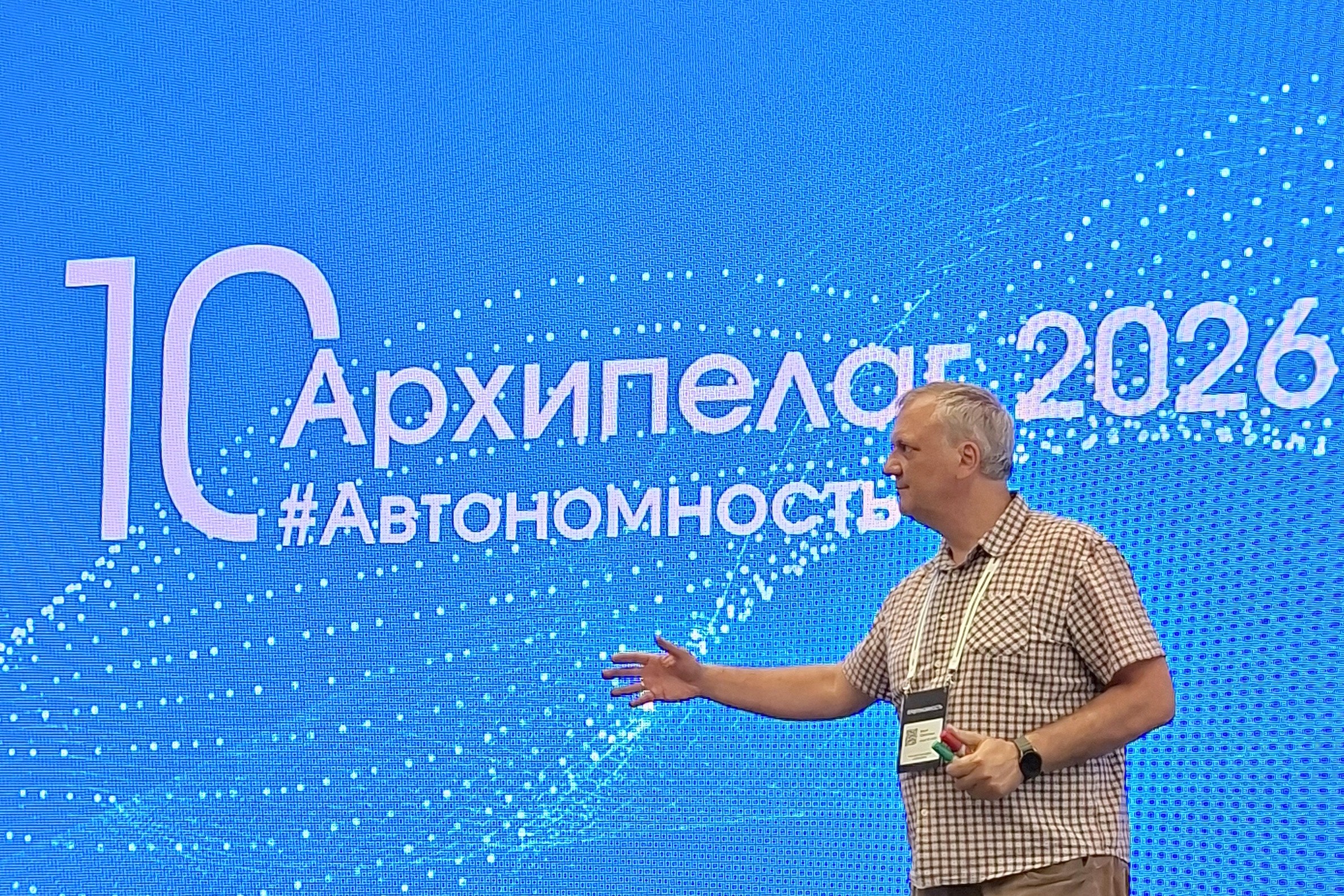
From July 24 to August 2, Nizhny Novgorod is hosting Archipelago 2026, an intensive project and educational programme that brings together startups, universities, businesses, and regions to work on technology projects in the fields of artificial intelligence and autonomous systems. This year, the programme focuses on autonomy in four areas: “human,” “business,” “city,” and “sky.”
As part of the intensive, Vadim Karastelev, Associate Professor at the Directorate of Educational Programmes of Moscow City University and Candidate of Political Sciences, together with Irina Borodina, Programme Director at the National Technology Initiative Foundation, presented their original “Strong Idea Refinement Methodology.”
What is the methodology about?
The methodology is a systematic approach to transforming an initial idea into a thoroughly developed concept ready for presentation. The process is based on two key principles:
- “Reverse questioning.” First, one AI system asks the author between 5 and 10 clarifying questions. This helps identify weaknesses and logical gaps that may not be apparent at first glance. Only then does the AI generate a structured description of the concept.
- Cross-critique. A second AI system takes on the role of an independent futurist and critic. It analyses the completed document, identifies gaps, and presents all discrepancies between its own position and that of the author in the form of a disagreement table.
Why does it matter?
The methodology is directly connected to the concept of “cognitive partnership” between humans and AI.
According to Vadim Karastelev, “AI literacy is equally about human communication and technology.” Developing reflective questioning skills makes it possible to see AI not simply as a tool, but as a full-fledged “thinking partner.”
What is the result?
The complete process of refining an idea using the new methodology takes up to one hour. The result is a detailed document describing the technologies, regulatory requirements, and implementation formats, which has undergone independent review.
The methodology was successfully tested by participants of Archipelago 2026 and has been adopted for further use.
Photo: Vadim Karastelev