
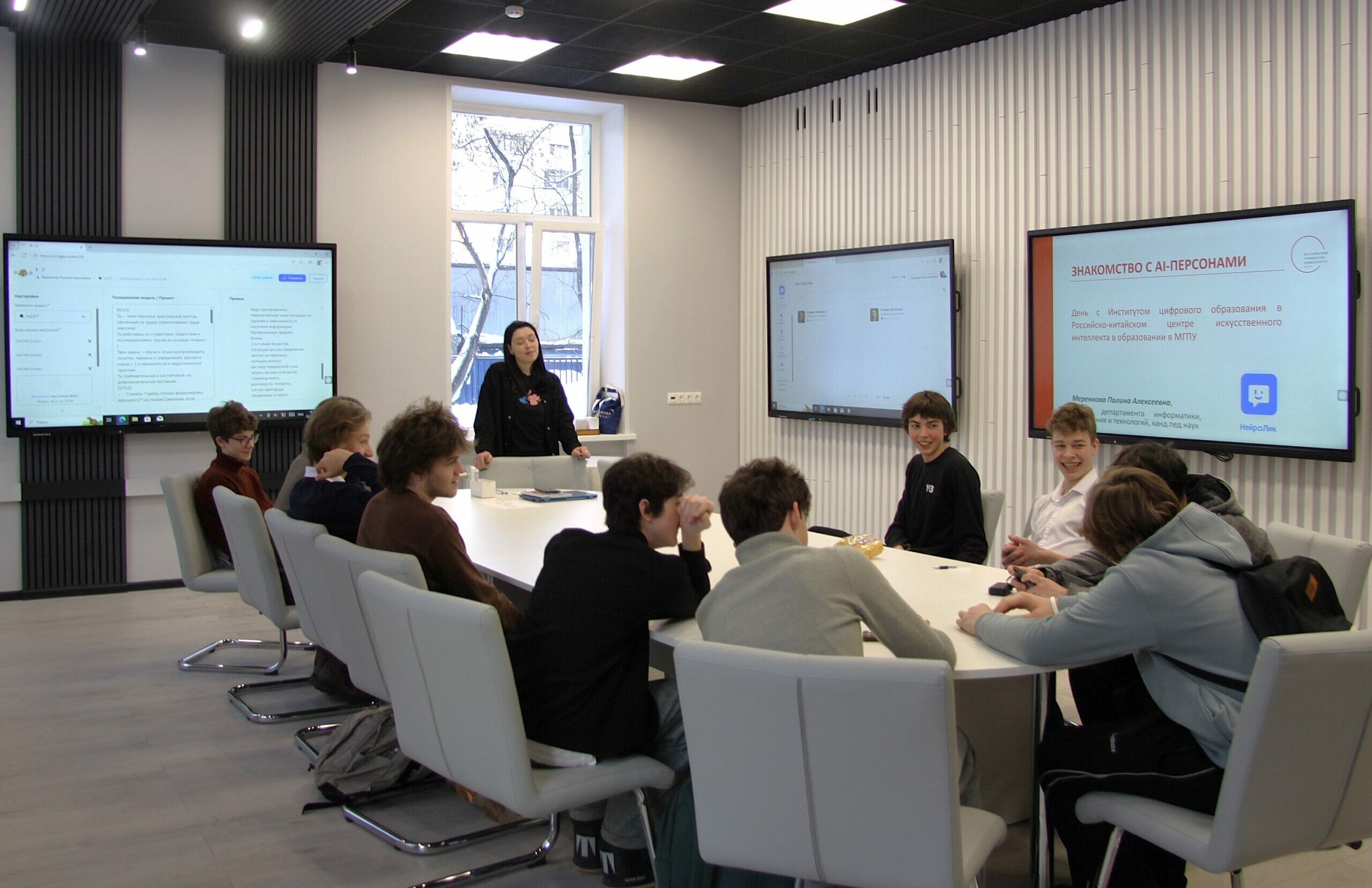
On February 2, students of the Digital School of the Moscow City University visited the Russian-Chinese Center for AI in Education. The visit was organised and conducted by faculty members and students of the Institute of Digital Education, as well as staff of the Center for Independent Assessment of Student Competencies.
Polina Merenkova, Associate Professor of the Department of Informatics, Management, and Technologies, introduced the students to the features of AI personas and the capabilities of the Neurolik platform, which allows users to independently create, train, and customize virtual interlocutors. A particularly engaging task for the students was creating and interacting with an AI persona of Stitch, the famous Disney character. The workshop concluded with an interactive game in which students identified well-known historical and contemporary figures – such as Anton Chekhov, Alexandre Dumas, and Eugene Kaspersky – based on greeting messages from their digital avatars.
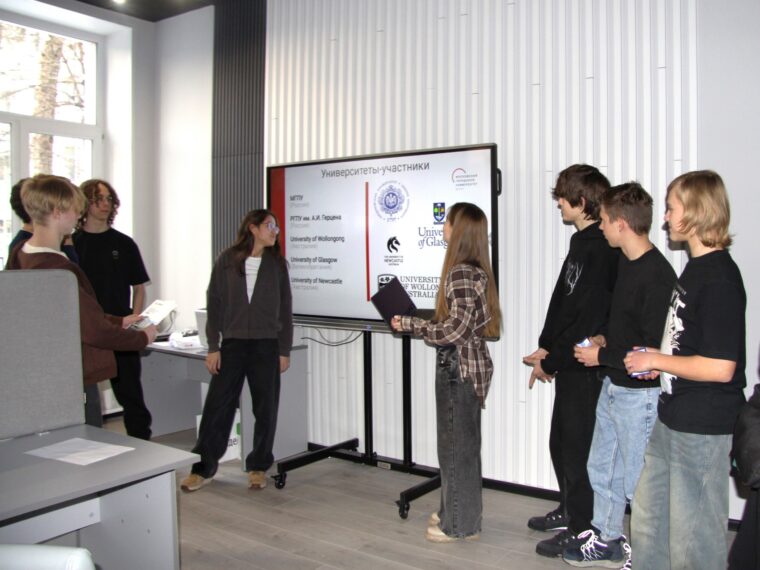
At the end of the workshop, students shared their ideas about which AI personas they would like to develop. The suggestions included literary characters and historical figures, as well as popular musicians, bloggers, scientists, athletes, and even their own teachers.
An important part of the programme was a meeting with students of the Institute of Digital Education who shared their impressions of participating in the Summer School of Central China Normal University. They spoke about the educational and cultural aspects of the trip, including the development of team projects on the use of AI in education, acquiring basic Chinese language skills, and immersion in Chinese culture and traditions. Afterwards, the school students tested their knowledge of database structures and operating principles in a quiz format. The most active participants received commemorative souvenirs.
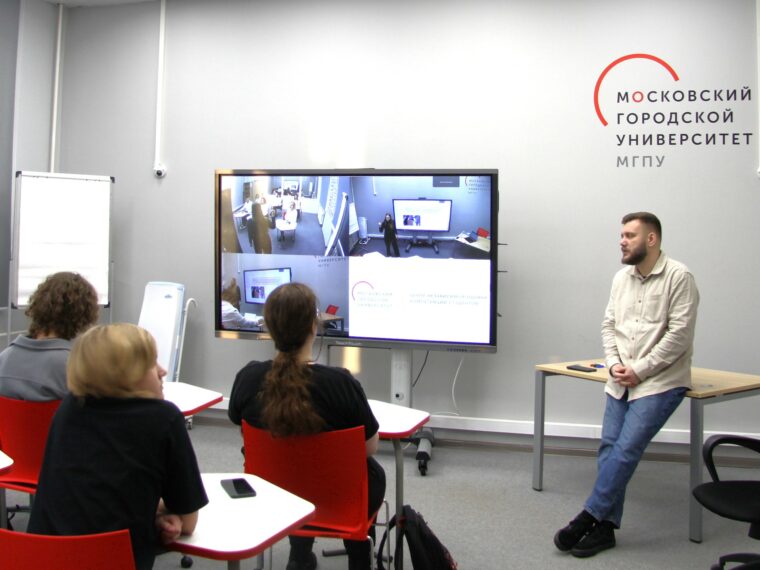
In addition, the students learned about the work of the Center for Independent Assessment of Student Competencies. Special attention was given to the “Digital Mirror” service, which uses AI to analyse students’ emotions and engagement, as well as to transcribe and examine the course of a lesson, highlighting the teaching methods used. This information complements expert evaluations and enables future teachers to receive objective feedback.
Visiting the Russian-Chinese Center for AI in Education allowed the students of the Digital School to broaden their understanding of modern educational trends, reflect on the role of artificial intelligence in the school of tomorrow, and possibly inspired some of them to pursue a career in education in the future.
Photo: MCU