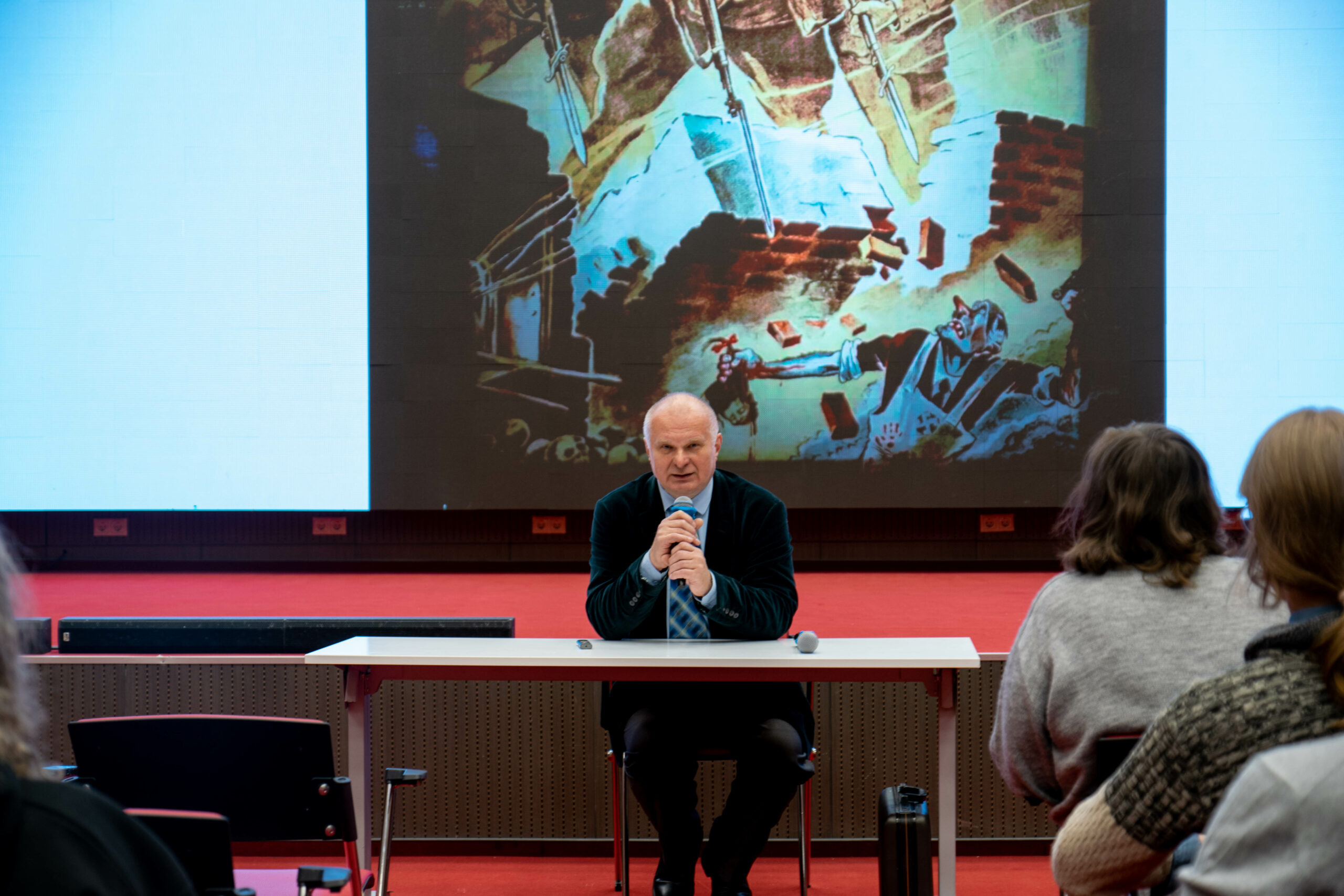
A meeting with Andrey Starkov, Senior Editor and Translator at TASS, was held at the Institute of Humanities. The event, organised by the Department of Philology, was dedicated to the 80th anniversary of the Nuremberg Trials.
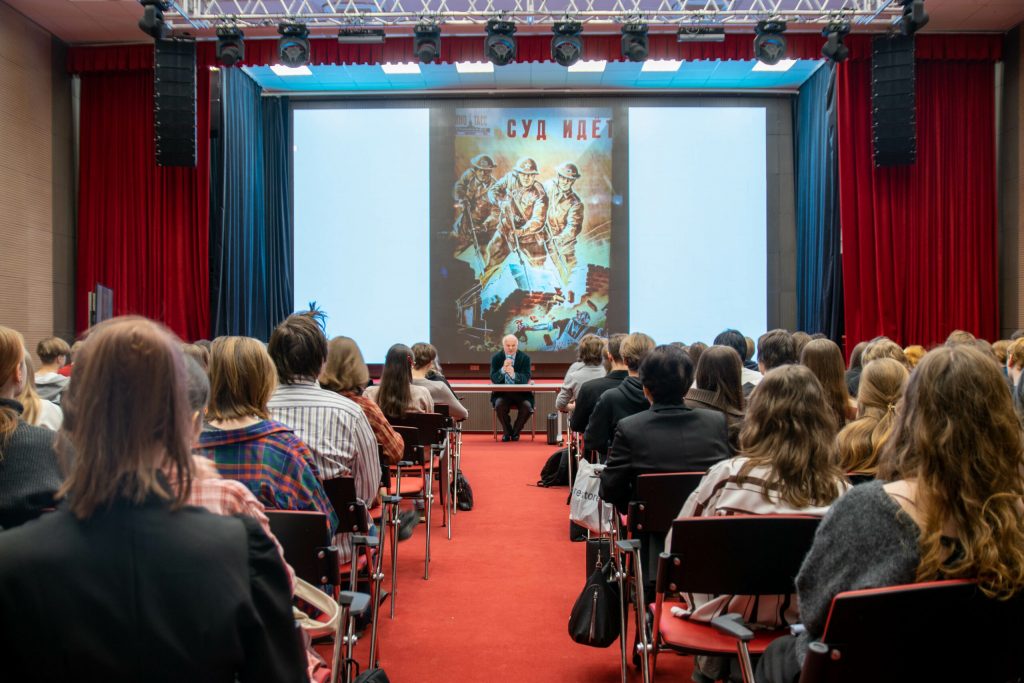
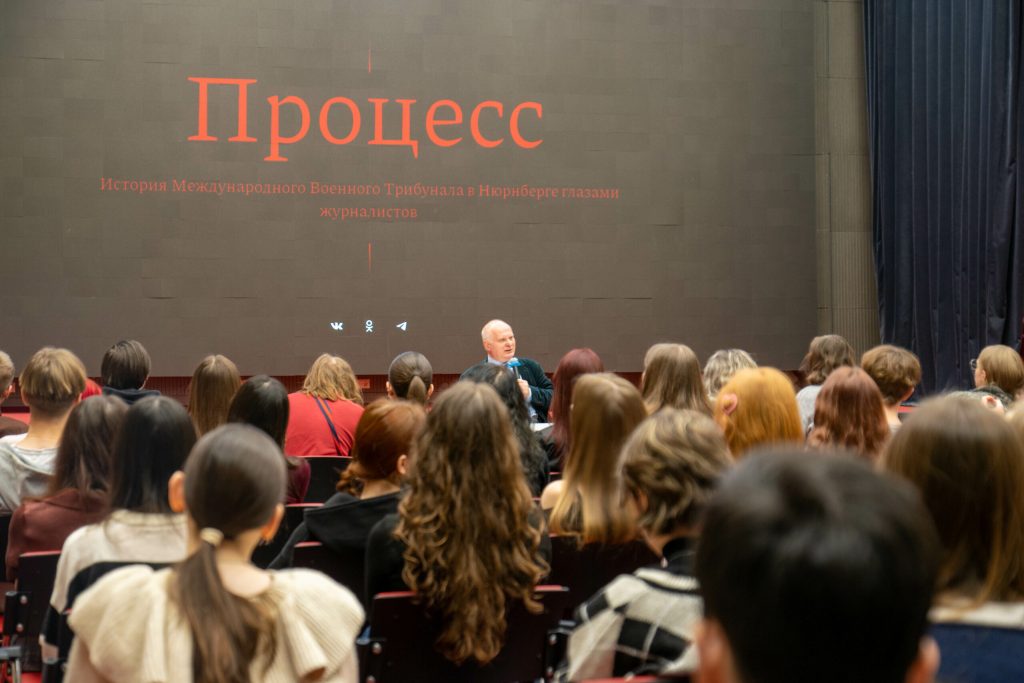
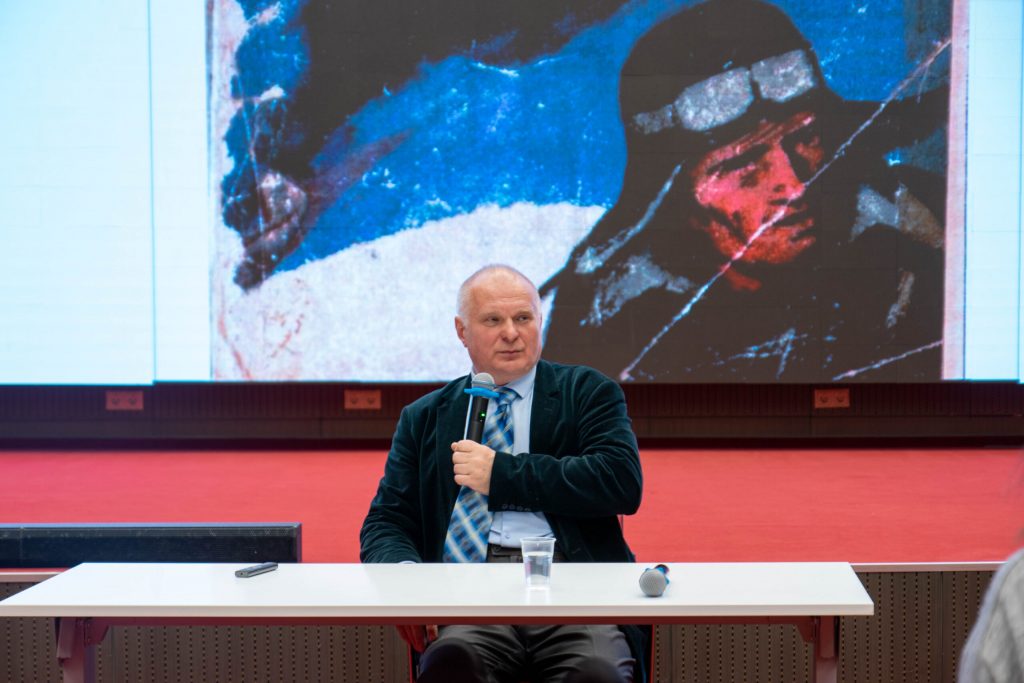
Mr Starkov shared his professional experience of working with historical sources. He spoke about methods of document verification, the search for archival materials, and cooperation with libraries and museums. Particular attention was given to the specifics of covering large-scale judicial proceedings in the media – the principles of objectivity, maintaining a balance between detailed factual reporting and accessibility for a broad audience, as well as the ethical boundaries of journalistic practice.
The speaker also addressed the challenges faced by translators when working with documentary materials from the Tribunal. These include the complexity of legal terminology, the nuances involved in translating idiomatic expressions, and the cultural and historical context of the mid-twentieth century.
The moderator of the meeting, Associate Professor Elena Bashilova, emphasised in her address to the participants: “An editor’s work is inseparably connected with documents. It is essential to handle historical materials accurately and meticulously, as they not only preserve the memory of the past but also bear direct relevance to contemporary events. The interpretation of such sources can significantly influence our understanding of current social processes.”
In conclusion, participants discussed the enduring significance of the Nuremberg proceedings for international law, including their role in shaping the norms of humanitarian law and mechanisms for holding individuals accountable for crimes against humanity.
The meeting provided a platform for dialogue between professionals and philology students, offering deeper insight into how historical memory functions and the role of the media in shaping it.
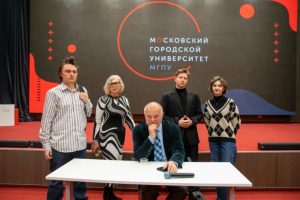
Photo: MCU